WiPhone · Volume 2
WiPhone — Vol 2: Power & Connectivity
Open-hardware ESP32-based SIP/VoIP phone
2.1 Battery + charging
A single-cell Li-ion internal battery, USB-charged through the same connector used for firmware flash. The Charge the battery PDF in ../manuals/wiphone/ is the authoritative reference; the summary:
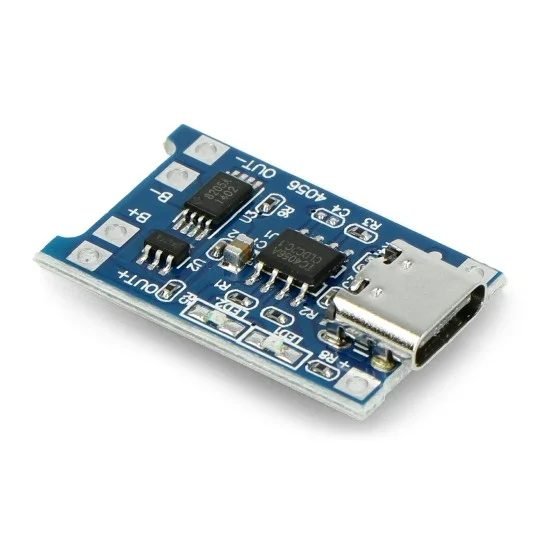
Capacity. Production runs vary; typical is 1500-2000 mAh single-cell LiPo, soldered or JST-PH-connectorized. The v0.4 documentation references a specific cell P/N (TBD — verify against the bench unit). Replacement is straightforward when the cell eventually dies — open the case, desolder or unplug, replace with an equivalent cell from a hobby supplier. Watch the polarity and the cell connector pinout; the v0.4 docs spell it out.
Charging. Standard USB 5 V input drives a Li-ion charge controller IC (the schematic shows the specific part — typically a TP4056 or equivalent linear charger; some production runs may use a switcher). Charge current is set by a resistor on the IC; the documentation indicates ~500 mA charge current, which is gentle on the cell and gives ~3-4 hours from empty to full for a 1500 mAh pack. Trickle taper at end-of-charge is automatic.
Runtime. Vendor-quoted figures are approximate and vary by use pattern:
- Standby (Wi-Fi associated, idle, registered to SIP server) — multiple days, typically 3-5. The ESP32’s modem-sleep mode keeps the Wi-Fi link alive on a low duty cycle; the display blanks; current draw is tens of milliamps.
- Active call (Wi-Fi RX/TX continuous, codec running, audio chain active) — a few hours, typically 3-5 depending on Wi-Fi signal strength (a marginal signal forces higher TX power and shortens runtime).
- Continuous display-on, browsing menus — between standby and active-call; not a meaningful operational mode but useful for development.
These are not great numbers for a “phone” comparison. A modern smartphone in standby lasts a day on a 4000+ mAh pack with aggressive power management; the WiPhone, on a 1500-2000 mAh pack with a less aggressive low-power story, doesn’t beat that. As an occasional-use programmable SIP endpoint, it’s fine.
The “is it still alive in the drawer” problem. Li-ion cells self-discharge slowly (a few percent per month) and the WiPhone’s standby draw drains the pack faster than self-discharge — a fully charged WiPhone left untouched in a drawer will be flat in roughly two weeks. If you genuinely want it as a “grab and use” tool, leave it on a USB charger in the drawer (the charge controller will float-charge correctly and the cell won’t be damaged). If you want it for long-term storage, take it down to ~50% charge, power it fully off (the docs cover the hold-button shutdown procedure), and check on it every couple of months.
Comments (0)