Baofeng UV-B5 · Volume 4
Baofeng UV-B5 — Vol 4: Reference
Earlier-generation Baofeng workhorse
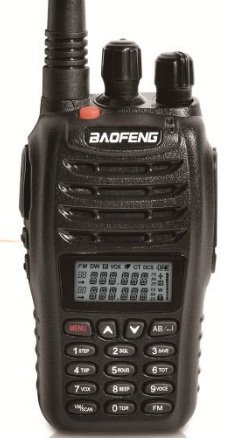
4.1 Tips and tricks
Disable the “kerchunk” TX-end roger beep. Like every other Baofeng, the UV-B5 ships with a short tone played at the end of each transmission (“kerchunk” — actually two short tones that some operators find useful as a confirmation, others find irritating). Disable in CHIRP under the global settings page → “Roger Beep” → Off. On the radio menu directly, it’s typically menu item 39 (TBD — verify on the unit). Disabling is also better operating practice on repeater systems where multiple operators are timing-sensitive about turn-taking.
The BL-B is unique — don’t try to swap with F8HP / UV-5R batteries. Different physical form factor from BL-5 and BL-8; contacts and case dimensions are not interchangeable. If it fails, plan on a specific BL-B replacement — Aliexpress (variable quality), eBay (verify cell chemistry and capacity from photos), or occasionally BTECH. Budget ~$15-25 mid-2026.
CHIRP can’t detect the radio? Check firmware version. The CHIRP UV-B5 driver expects specific firmware version identification strings during the model-detection handshake. If CHIRP reports “unrecognized model” or hangs at the detect step, the most common causes are: (1) wrong COM port selected, (2) cable not seated firmly in the radio’s K-1 connector, (3) a too-old CHIRP build. (CHIRP has only one UV-B5 driver; the “uvb5_old” driver sometimes cited does not exist.) Check the firmware version through the radio’s menu (the version display item — verify item number on the unit) and cross-reference against the CHIRP wiki page for the UV-B5 driver if detection consistently fails.
The radio resets to channel 1 on power-cycle in some firmware revisions. A documented quirk of some UV-B5 firmware versions is that the radio always boots up tuned to memory channel 1, regardless of what channel was selected when powered off. Put your most-commonly-used local repeater on channel 1 if this behaviour bothers you; or accept it as a feature (you always know what channel you’re starting on after a power-cycle). The F8HP and UV-5R do not have this behaviour.
The rotary knob can be re-enabled for direct VFO frequency entry in some firmware versions — TBD verify on the unit. The default behaviour is channel-list navigation only; on some firmware the knob also tunes a VFO in 5 / 6.25 / 10 / 12.5 / 25 kHz steps when in VFO mode. Useful for casual frequency exploration without keypad entry.
4.2 Firmware and software on this site
No UV-B5 firmware update was ever published, so the downloads are programming software only. The archive, with checksums and README files, is at https://radios.fubsypoly.com/downloads/#baofeng-uv-b5.
Table 1 — Firmware and software on this site
| Product | Recommended release |
|---|---|
| UV-B5 PC software (BaoFeng factory) | 1.09 (2012-09) |
| CHIRP | Current CHIRP-next build — via the CHIRP project (not hosted); archived: next-20251108, legacy-20221217 |
| Prolific PL2303 driver (programming cables) | 3.2.0.0 |
| FTDI VCP driver | Current — via FTDI (not hosted) |
| WCH CH341SER driver | Current — via WCH (not hosted) |
| RT Systems BAO-B5/B6 | Current — paid — vendor only |
4.3 Resources
Manuals (local). ../manuals/baofeng-uv-b5/ — contains UVB5_Manual.pdf (the original English-translation factory manual, useful primarily for the menu-item table and the basic operating reference; the translation quality is mediocre but the technical content is accurate).
Community references.
- Miklor UV-B5 page — https://www.miklor.com/uvb5/ — the canonical community reference for the UV-B5. The Miklor site is a long-running community resource for the Chinese-HT ecosystem; the UV-B5 page covers the cable wiring, the menu-item reference, the firmware-version-by-serial table, and known issues. Read this before doing anything non-trivial with the radio.
- CHIRP wiki UV-B5 page — https://chirpmyradio.com/projects/chirp/wiki/Baofeng_UV-B5 — the authoritative reference for the CHIRP driver, including the known channel-name corruption bug history and the model-detection notes.
Vendor.
- Baofeng (the manufacturer) — https://baofengtech.com (BTECH, the US importer / distributor). UV-B5 is no longer in active production; BTECH stocks replacement BL-B batteries and accessories intermittently.
Cross-references in this series.
- Vol 1 — overview, the decision graph for “which radio for X?”, the license envelope. The UV-B5’s posture (backup amateur dual-band HT) is captured there in the lineup matrix.
- Vol 6 (Baofeng F8HP) — the daily-driver Baofeng — read this together with the UV-B5 volume to understand the architectural progression and which Baofeng to reach for first.
- Vol 8 (AnyTone AT-D878UVII PLUS) — the DMR + analog handheld, the actual daily-driver dual-band radio in the lineup. The UV-B5 cannot match its features but stays in the drawer as the analog-only backup.
- Vol 3 (Programming software landscape) — the deep CHIRP treatment, plus the full software-vs-radio matrix across the series.
- Vol 4 (Frequency planning & license envelope) — the regulatory framing for what TX is lawful on which bands; applies to the UV-B5’s amateur 2 m / 70 cm authorization.
Cross-references in the sibling Antennas deep dive.
- Antennas Vol 9 (Portable & mobile monopoles) — the deep treatment of the NA-771 and the portable-HT antenna ecosystem; the rationale behind the recommended upgrade path for the UV-B5 / F8HP / VX-8DR cluster.
- Antennas Vol 29 (Use-case matrix) — the per-radio antenna recommendations with the 4-tier upgrade ladder for each radio in this series.
Comments (0)