Midland WR120 · Volume 4
Midland WR120 — Vol 4: Reference
NOAA WX radio with Specific Area Message Encoding alerting
4.1 Tips and tricks
4.1.1 FIPS code lookup is non-obvious
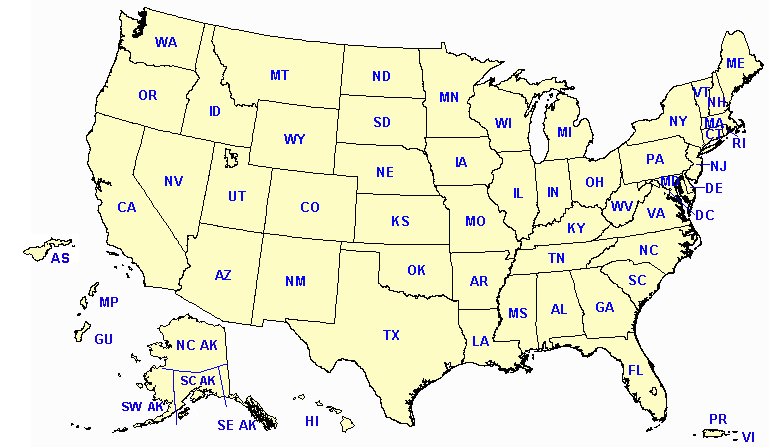
The NWS lookup page at https://www.nws.noaa.gov/nwr/coverage/county_coverage.html is organized by state, then by NWR transmitter (KIH28 Detroit, KZZ77 Pontiac, etc.), then lists each county served by that transmitter with its FIPS code. The lookup is bidirectional — find the transmitter that covers your area first (which is also how you identify the NWR channel WX1–WX7 to program), then find your county within that transmitter’s coverage list. The 6-digit S.A.M.E. code is the leading “0” + the standard 5-digit Census FIPS code (e.g., Livingston County MI = Census FIPS 26093 → S.A.M.E. 026093).
4.1.2 Multi-county FIPS configuration
The WR120 supports up to 25 FIPS codes (TBD — see §3.1). Use them: home, work (if different), parents’/in-laws’ counties (so you’re alerted when a tornado approaches them and can call to confirm they’re sheltering), children’s school district, weekend/vacation property, through-route counties for regular drives. 8–10 codes covers most family scenarios.
4.1.3 Event-filter tuning
Highest-value tuning is disabling RWT if the Wednesday chirp is annoying — but the RWT is also how you know the radio still works, so if disabled, schedule a monthly manual “press WEATHER and listen” check. RMT (monthly) and NPT (quarterly) can also be disabled but generate few enough alerts that most operators leave them enabled.
4.1.4 Outdoor antenna upgrade math
For marginal-reception locations (basement, RFI-heavy urban core, terrain-shadowed from the NWR transmitter): a 162 MHz dipole on a 6–10 ft mast outside gives 2–3 dB more signal than the stock whip and removes the indoor RFI floor — combined S/N improvement is typically 6–10 dB, the difference between intermittent missed alerts and reliable decoding. Parts cost under $20 (Antennas Vol 6 §4 has the build — wire, two end insulators, optional 1:1 current BALUN). Skipping the BALUN and accepting some common-mode shield radiation is fine at 162 MHz on a short coax run. For a commercial buy, a Workman 162-MHz ground-plane works, as do budget marine-VHF antennas (cut for 156 MHz, usable at 162 with ~1.3:1 SWR — the WR120’s receiver is undemanding).
4.1.5 AA battery rotation
Replace the AA backup batteries annually. The WR120 doesn’t drain them quickly in standby (months on a fresh set), but alkaline leakage over multi-year periods corrodes the battery contacts and can permanently damage the radio. Lithium primary AAs (Energizer Ultimate Lithium L91) eliminate the leakage risk and roughly double standby life at ~3× the cost; worth it for a radio that may sit silent for years between alerts. A radio left with dead alkalines for 6–12 months may have corroded contacts severe enough that the AC-only mode fails too (the regulator board can have a current path through the battery terminals); if a long-untended WR120 won’t power up on AC, pull the batteries, clean contacts with a vinegar swab and fiberglass eraser, retry. Deep corrosion is often a write-off.
4.1.6 Multiple radios for whole-house coverage
Two WR120s at $35–45 each (mid-2026) totals $70–90 — cheaper than a single Public-Alert-certified base with wireless slaves ($150–250 for base plus $50 per slave). For a multi-story or sprawling home, two independent WR120s (one upstairs audible from bedrooms, one downstairs audible from kitchen / workshop) give coverage redundancy with no shared-failure mode. Configure both with the same FIPS list and event filter; they alarm in parallel. A second unit at the shack desk (near the SDS200 base scanner) gives the operator the alert at the bench even when not in the bedroom — worth considering as a $35 add.
4.2 Firmware and software on this site
The WR120 has no user-installable firmware and no PC programming software; Midland publishes only documentation for it, so the site’s download archive has nothing to offer. Configuration is copied between radios through the rear Cloning Port, not through a computer.
4.3 Resources
Manuals: ../manuals/midland-wr120/ — Midland WR120 user manual (PDF; TBD if downloaded locally — verify path and download from Midland support if not). Current revisions are the WR120B / WR120EZ family, functionally identical for S.A.M.E. and event-filter purposes.
Midland USA:
- Product page: https://midlandusa.com/products/wr120-noaa-weather-alert-radio
- Support / downloads: https://midlandusa.com/support
NOAA Weather Radio (NWR):
- Program overview: https://www.weather.gov/nwr/
- Coverage maps and transmitter database: https://www.nws.noaa.gov/nwr/coverage/
- County / FIPS lookup: https://www.nws.noaa.gov/nwr/coverage/county_coverage.html
- S.A.M.E. event codes (full list, ~80 codes): https://www.weather.gov/nwr/eventcodes
- Public Alert® receiver certification (CEA-2009-B) overview: https://www.weather.gov/nwr/publicalert
S.A.M.E. and EAS technical references:
- NWSI 10-1712 (NWS instruction on NWR S.A.M.E. encoding): https://www.weather.gov/media/directives/010_pdfs/pd01017012curr.pdf
- FCC Part 11 (EAS, governs S.A.M.E. encoding used by NWR): https://www.ecfr.gov/current/title-47/chapter-I/subchapter-A/part-11
- IPAWS (upstream of the EAS / NWR S.A.M.E. message flow): https://www.fema.gov/emergency-managers/practitioners/integrated-public-alert-warning-system
Sibling project cross-references:
Comments (0)