Midland WR120
Overview
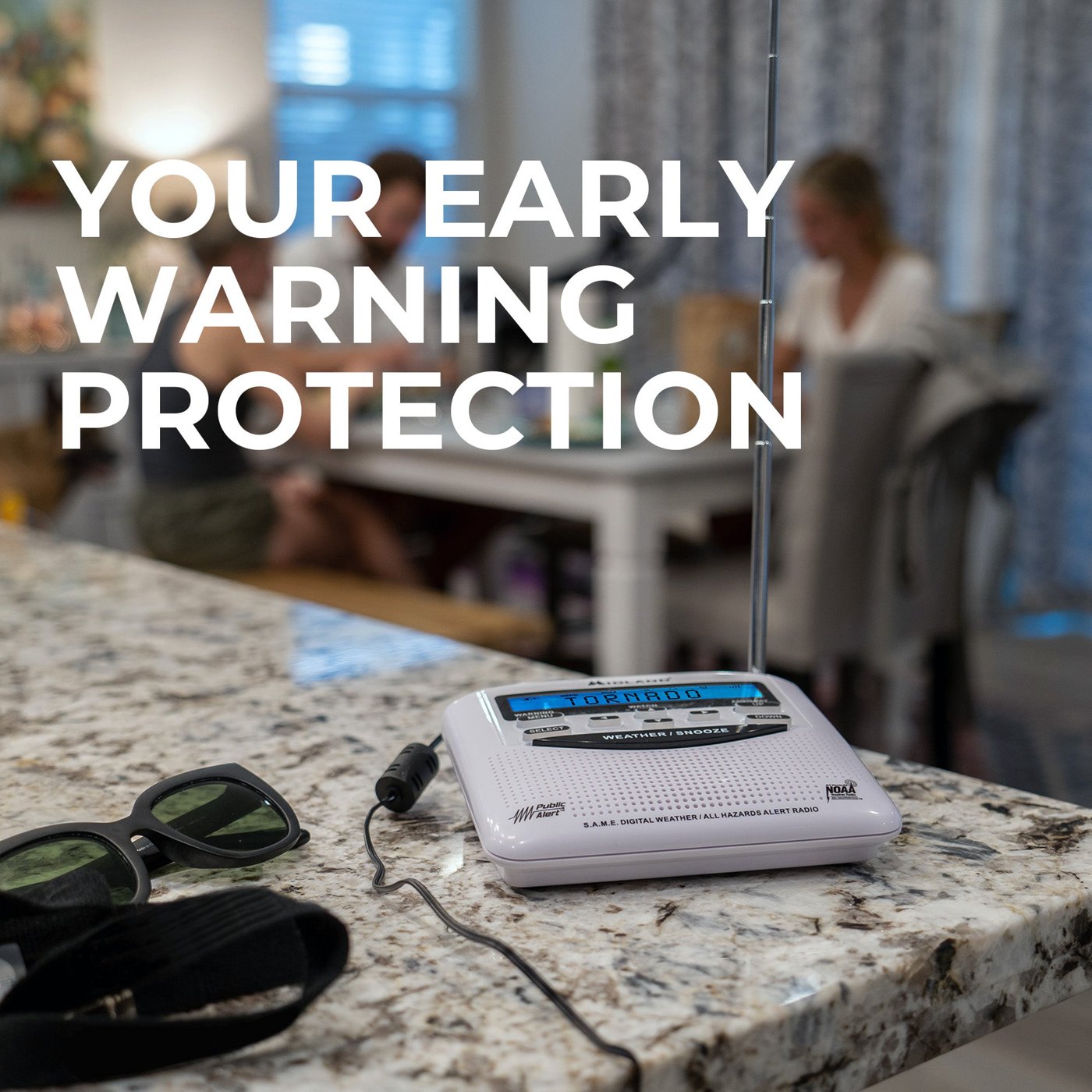
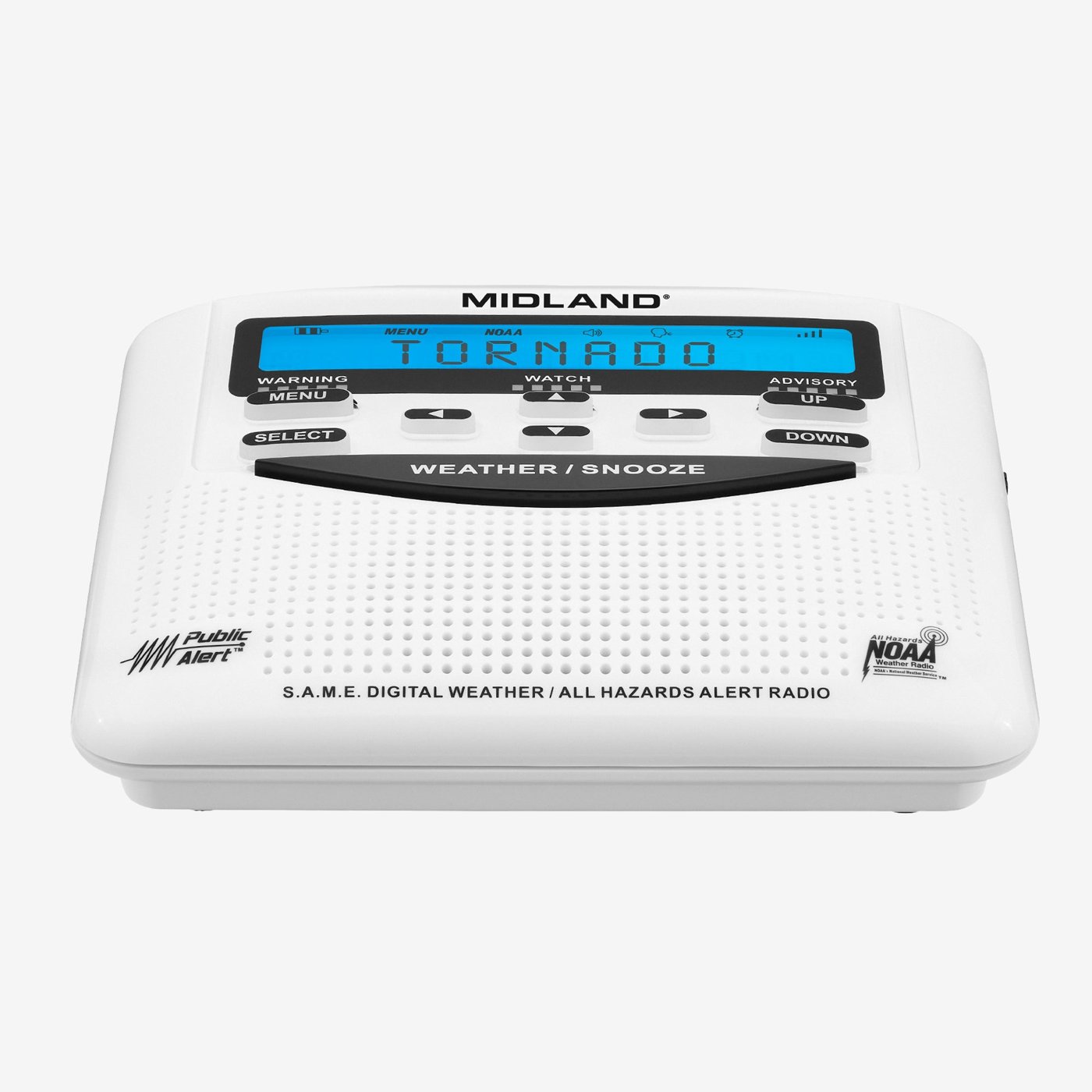
The Midland WR120 is the dedicated NOAA weather-alert receiver in the lineup — the only device on the bench whose single job is to sit silent for weeks and then yell when a tornado, severe-thunderstorm, or flash-flood warning is broadcast for the configured county FIPS code. It operates exclusively on the seven NOAA Weather Radio All Hazards channels in the 162.400–162.550 MHz VHF band and implements S.A.M.E. (Specific Area Message Encoding), the FIPS-coded protocol that lets the receiver ignore alerts targeted at other counties. This deep dive covers the hardware, the operating modes, the on-panel memory/setup workflow, paper-based backup discipline, and home field use. Migrated from the Scanners project as part of the Scanners/Radios restructure Stage 2 Phase 2 (2026-06-16).
Context
The WR120 is Public Alert®-certified — it meets the NWS/CEA-2009-B standard for S.A.M.E. decoding, event-code filtering, alert-tone audibility, and tamper-resistant programming, and is one of the units NWS cites in its recommended-equipment list. Its load-bearing feature is S.A.M.E. selectivity: silence-until-relevant behavior is what makes the household actually listen when it sounds, versus a generic non-S.A.M.E. radio that beeps on every county in the transmitter footprint. It is a receive-only appliance with mains power plus AA backup, configured entirely on-panel — no PC programming, no CAT control, no codeplug. Current revisions are the WR120B / WR120EZ family, functionally identical for S.A.M.E. and event-filter purposes.